

Terms like stocks, bonds, and treasury bills often come up in conversations, yet many young people feel unable to engage due to limited financial literacy. These concepts, however, are important when building long‑term wealth. While investing is often perceived as complex, it becomes far more approachable once you understand the language. For young individuals eager to begin their investment journey, here are 10 key terms that provide a solid foundation and enable meaningful participation in financial discussions:
1. Investment: Making an investment means using money today to grow its value in the future. It involves putting money into different assets to reach a goal and/or attain long‑term wealth. For example, if you buy a 1-year Government Note with GH¢500 at an interest rate of 15%, you will earn GH¢75 in interest. At the end of the period, your money grows to GH¢575 (GH¢500 + GH¢75 interest). This isn’t magic, it is the power of investment. An investment turns today’s money into tomorrow’s growth.
2. Compound Interest: This is the money that is earned on both your original investment and on the interest that you earn; it makes your money grow faster over time. Compound interest is calculated as: Your money × (1 + interest rate)years.
In simple terms, it means that
Year 1: You earn interest on your initial investment.
Year 2: You earn interest on both your initial investment and the interest from year 1.
Year 3: You earn interest on your initial investment and the interest earned in years 1 and 2. Compound interest can dramatically increase your growth potential and help you reach your financial goals quicker.
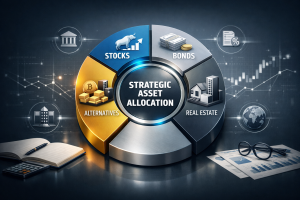
3. Portfolio: A portfolio is the total collection of investments owned by an individual or an organization and can include asset classes such as stocks, bonds, treasury bills, and mutual funds. Think of it as a big basket where all your investments are held together.
4. Risk Tolerance: Risk is the chance that an investment’s outcome will be different from what you expect. Risk tolerance is how much risk an investor is comfortable taking when making investment decisions. It helps financial advisors match investments to an investor’s long‑term objectives. Some investors have a high-risk tolerance and are willing to take bigger risks for potentially higher returns, while others have a low risk tolerance and prefer safer, more stable investments.
5. Inflation: Inflation is the gradual rise in the prices of goods and services over time. This reduces the purchasing power of money, meaning the same amount of money buys fewer things than before. For example, if a pen costs GH¢5 today, you can buy 10 with GH¢50. But if the price rises to GH¢8, that same GH¢50 can no longer buy 10 pens.
This is why investors aim to earn returns that are higher than the inflation rate, so their money grows faster than prices increase.
6. Liquidity: Liquidity is how quickly and easily an investment or asset can be turned into cash without losing value. Highly liquid assets can be sold or accessed right away. Examples include treasury bills, money in a savings account and cash itself (the most liquid asset since it can be used immediately).
7. Shares (Stock): Shares represent units of ownership in a company; when you buy shares, you own a small part of that company. Investors can make money from shares in two main ways:
Capital gains: When you buy a share at one price and later sell it at a higher price, the difference is your profit (or capital gain)
Dividends: These are the portions of the company’s earnings that it distributes to its shareholders. As a company’s earnings grow, dividends may also increase proportionally
8. Bond: A bond is an investment where an individual lends money to the government or a company for a set period in return for regular interest payments. At the end of the agreed term, the original amount (principal) is repaid to the investor. Bonds are generally considered lower‑risk compared to stocks, making them a more stable option for conservative investors.
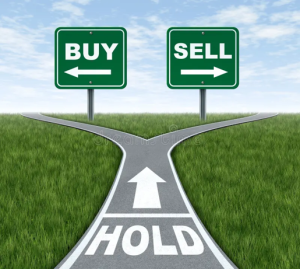
9. Bull and Bear Markets: A bull market is when stock prices are rising, and investments are expected to grow. It usually reflects strong economic conditions and investor confidence. A bear market, on the other hand, is when stock prices are falling and investments are losing value. In this environment, investors often become cautious and less confident about the market.
10. Market Value: Market value is the current price at which an asset can be bought or sold in the market. Simply put, it shows the value that the market places on your investment today. For example, if you own 600 units and each unit is priced at GH¢10, your market value is 600 × GH¢10 = GH¢6,000. This means that if you sell your asset now, you will receive GH¢6,000.
Reaching the end of this blog is an important step toward growing your investment knowledge. Investing is a strategic way to build wealth, and you now have a head start. Now that you understand the basic terms, your next course of action should be to learn how you can begin investing. With this foundation, the process won’t feel as intimidating as before. Start investing today, and your future self will thank you.
——————————————————————————————————————————————————————————————————————————-
The information contained in this blog is being provided for educational purposes only and does not constitute a recommendation from any Bora Capital Advisors entity to the recipient. Bora Capital Advisors is not providing any financial, economic, legal, investment, accounting, or tax advice through this blog to its recipient.
This report reflects the views and opinions of Bora Capital Advisors Ltd, and is provided for information purposes only. Although the information provided in the market review and outlook section is, to the best of our knowledge and belief correct, Bora Capital Advisors Ltd, its directors, employees and related parties accept no liability or responsibility for any loss, damage, claim or expense suffered or incurred by any party as a result of reliance on the information provided and opinions expressed in this report, except as required by law. The portfolio performance data represented in this report represents past performance and does not guarantee future performance or results.